


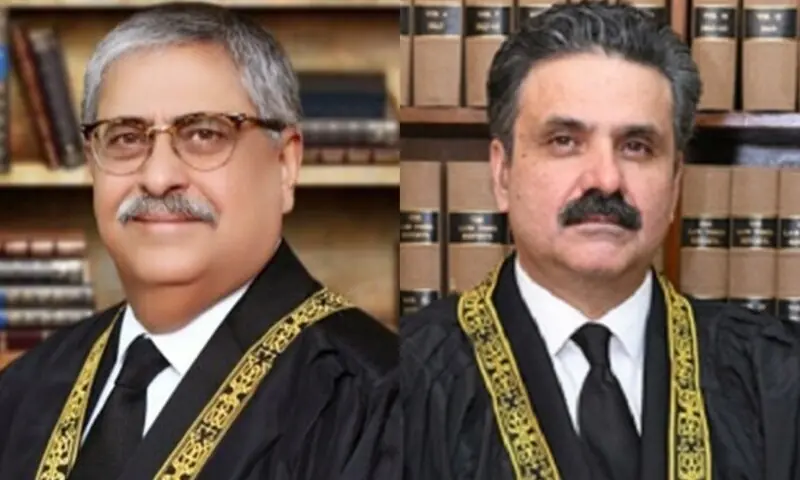
Justice Mansoor Ali Shah has stepped down from the Supreme Court of Pakistan after the controversial 27th Constitutional Amendment, a move that has shaken the country’s legal and political circles.
In a deeply personal resignation letter, he called the amendment a “serious assault on the Constitution,” saying it strips the Supreme Court of its true purpose and pushes the judiciary under government influence.
RELATED: Justices Shah, Minallah resign from ‘diminished’ SC following passage of 27th Amendment
Justice Shah wrote that he could not “stand by silently” while the institution he devoted decades to was weakened. According to him, a judge’s oath only holds meaning when the court itself has the authority to safeguard people’s rights. Without that authority, he argued, the judicial robe becomes “an empty symbol” instead of a responsibility. His words reflect not only frustration but a genuine sense of loss for what he believes is a critical blow to constitutional justice.
Read More: benazir-shah-fights-back-against-ai-deepfake-in-online-harassment-scandal
Throughout his career, Justice Mansoor Ali Shah gained a reputation as a reformer. As Chief Justice of the Lahore High Court, he introduced modern case-management systems, strengthened accountability mechanisms, and established specialized courts for vulnerable groups. At the Supreme Court, he delivered landmark judgments on constitutional rights, environmental protection, and human dignity — shaping Pakistan’s legal landscape in meaningful ways.
READ MORE: Justice Athar Minallah Urges Protection of Judicial Independence in Pakistan
His resignation has triggered intense nationwide reactions. Many legal experts say he has taken a brave stand for judicial independence, even at the cost of his prestigious position. While the government insists that the amendment is aimed at administrative restructuring, analysts believe Justice Shah’s departure will have long-term implications for the balance of power between the executive and the judiciary. For many Pakistanis, his exit is more than just a headline — it’s a reminder that an independent judiciary is vital for their rights and freedoms.
READ MORE: mohammad salman
FAQs About Justice Mansoor Ali Shah’s Resignation
1. Why did Justice Mansoor Ali Shah resign?
He resigned because he believed the 27th Constitutional Amendment undermined the independence and constitutional authority of the Supreme Court.
2. What did the 27th Amendment change?
The amendment altered the structure and jurisdiction of the Supreme Court, which critics say places judicial powers under greater executive influence.
3. How did Justice Shah describe the amendment?
He called it a “serious assault on the Constitution” and argued that it dismantles the Supreme Court’s fundamental role.
4. What reforms is Justice Shah known for?
He modernized court systems, introduced case-management reforms, and established specialized courts such as gender-based violence and child courts during his tenure at the Lahore High Court.
5. How has the legal community reacted to his resignation?
Many lawyers and civil society members view it as a principled stand for judicial independence, while government officials maintain the amendment was necessary.
6. What could be the long-term impact of his resignation?
Experts believe his decision may influence future debates on judicial autonomy, constitutional limits, and the separation of powers in Pakistan.












2 Comments
[…] READ MORE: Justice Mansoor Ali Shah Steps Down, Leaving a Powerful Message About Judicial Freedom […]
Many are curious about Benazir Shah journalist age, Benazir Shah date of birth, and her education — details she has chosen to keep private, highlighting her focus on work over personal publicity. Although she maintains a social media presence, including Benazir Shah Instagram, she has emphasized that digital platforms must protect user safety. Questions about Benazir Shah husband also remain unanswered, with her public persona grounded firmly in professional advocacy.More News: Justice Mansoor Ali Shah Steps Down, Leaving a Powerful Message About Judicial Freedom