
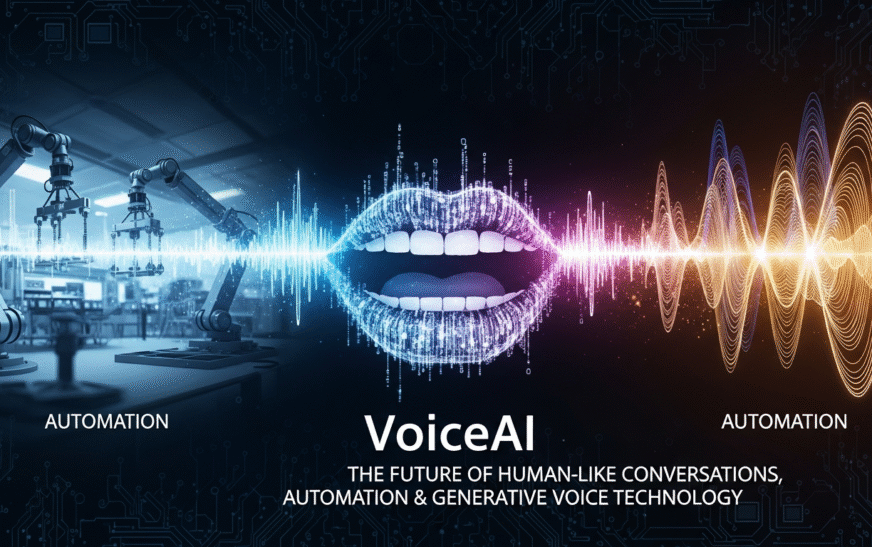
VoiceAI is rapidly transforming how humans interact with machines. What started as simple voice commands has evolved into highly functional, human-sounding AI agents that can perform tasks, hold natural conversations, and generate lifelike audio — all without breaks, fatigue, or limitations. Today, VoiceAI is powering millions of creators, developers, professionals, and global enterprises.
In this complete guide, we explore what VoiceAI is, how it works, why it matters, and how it’s shaping the future of communication, automation, and content creation.
What Is VoiceAI?
VoiceAI is an advanced branch of artificial intelligence that focuses on understanding, generating, and processing human speech.
It combines:
- Machine learning
- Natural language processing
- Voice synthesis
- Speech recognition
- Generative AI
VoiceAI enables systems to understand spoken queries, respond naturally, and generate human-like voices for conversations, content, and automation.
Why VoiceAI Matters Today
We’re living in an era where automation and digital communication dominate. VoiceAI brings speed, accuracy, personalization, and realism to tasks that traditionally required human involvement.
Key strengths of VoiceAI include:
1. Human-Like Conversations
Modern AI phone and support agents sound so real that they build trust instantly.
They help businesses:
- Reduce missed calls
- Automate customer support
- Handle bookings and queries
- Reduce manual workload
- Improve customer experience
The result?
24/7 responsiveness with near-human warmth.
2. Realistic Text-to-Speech (TTS)
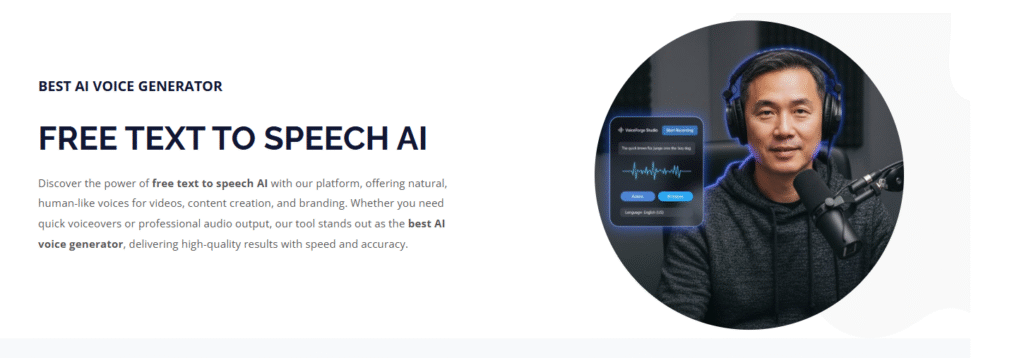
The latest VoiceAI engines generate studio-quality audio from simple text input.
Users can:
- Pick a voice
- Enter words
- Generate natural, expressive audio instantly
This is invaluable for:
- Voiceovers
- YouTube videos
- Audiobooks
- Podcasts
- E-learning
- Marketing content
3. Ultra-Realistic AI Voice Models
Today’s VoiceAI platforms offer:
- Low-latency conversational agents
- Instant responses
- Emotion-rich voice tone
- Multilingual support
These features make VoiceAI suitable for creators, businesses, educators, and enterprises at scale.
How VoiceAI Works
VoiceAI is built on four major technical components:
1. Speech Recognition
It converts human speech into text with high accuracy.
2. Natural Language Processing (NLP)
This helps the AI understand meaning, context, intention, and emotion.
3. Machine Learning Algorithms
ML improves the model over time, making it smarter and more accurate.
4. Voice Synthesis / Text-to-Speech
AI converts text back into human-sounding voice.
Together, these elements create seamless, natural human–machine communication.
Applications & Use Cases of VoiceAI
VoiceAI is impacting nearly every industry. Here’s how:
1. Customer Support & AI Phone Agents
- Handle calls with human-like interactions
- Reduce wait times
- Answer frequently asked questions
- Manage bookings & appointments
- Provide after-hours assistance
Businesses save time, reduce workload, and deliver consistent support.
2. Content Creation & Voiceover Production
VoiceAI eliminates the need for expensive studios or voice actors for:
- Explainer videos
- Ads
- Audiobooks
- E-learning courses
- Social media content
- Animation voiceovers
Just type → select voice → generate → done.
3. Social Media: VoiceAI on LinkedIn
LinkedIn is integrating accessibility and networking tools using VoiceAI:
- Voice-enabled posts
- Audio introductions
- Voice messages
- Personalized communication
- Creator tools for better engagement
This makes professional networking more human and more accessible.
4. Healthcare & Telemedicine
VoiceAI assists with:
- Patient triage
- Appointment reminders
- Medical transcription
- Automated patient follow-ups
Hospitals benefit from increased efficiency and reduced staff load.
5. Smart Devices & Home Automation
From smart speakers to home assistants, VoiceAI powers:
- Voice commands
- Smart home control
- IoT device integration
- Accessibility tools for elderly or disabled users
6. Enterprise Automation
Large organizations use VoiceAI to:
- Streamline workflows
- Automate internal communication
- Conduct virtual meetings
- Analyze customer sentiment
- Support CRM systems
Future of VoiceAI: Generative AI & Machine Learning
The most exciting advancements in VoiceAI are driven by generative AI and self-learning systems.
Future VoiceAI models will offer:
- Even more lifelike conversations
- Emotional tone control
- Multilingual fluidity
- Personalized AI agents
- Real-time adaptive responses
- Data-driven learning
- Fully autonomous voice assistants
VoiceAI won’t just copy human voices — it will understand human intention.
Impact of VoiceAI on Society
VoiceAI is reshaping how we interact with both machines and each other.
Social Impact
- Improved accessibility for visually impaired users
- Reduced communication barriers
- Increased productivity
- Faster global collaboration
Business Impact
- 24/7 AI workforce
- Lower operational costs
- Higher customer satisfaction
Creative Impact
- Democratizes voice production
- Enables solo creators to produce professional audio
- Speeds up content creation
VoiceAI is not just a technology — it’s a societal shift.
1. What is VoiceAI?
VoiceAI is an advanced technology using artificial intelligence to understand, generate, and respond to human speech with natural, lifelike accuracy.
2. How does VoiceAI work?
It uses speech recognition, NLP, machine learning, and text-to-speech to convert voice to text and generate human-sounding audio.
3. What makes VoiceAI sound human?
Modern VoiceAI uses neural networks trained on thousands of speech samples, enabling realistic tone, pitch, pacing, and emotional expression.
4. Where is VoiceAI used?
Customer support, voiceovers, smart devices, marketing, social media, LinkedIn networking, e-learning, healthcare, and more.
5. Is VoiceAI good for content creators?
Yes. It enables creators to generate studio-level voiceovers instantly without expensive equipment or voice actors.
6. Does VoiceAI replace human jobs?
It automates repetitive tasks but also creates new roles in AI training, voice engineering, content creation, and system maintenance.
7. Is VoiceAI the future?
Yes. With generative AI and machine learning, VoiceAI will become even more natural, context-aware, and capable of independent problem-solving.